The Complete Guide to a Healthier and Happier Life
Introduction
In today’s fast-paced world, maintaining a healthy lifestyle has become more important than ever. Many people spend hours sitting at desks, using smartphones, and relying on vehicles for even the shortest distances. As a result, physical inactivity has become a major concern worldwide. One simple, affordable, and effective solution to this problem is cycling.
Cycling is more than just a mode of transportation. It is a powerful exercise, a sustainable lifestyle choice, and an enjoyable recreational activity. Whether you ride a bicycle for commuting, fitness, adventure, or leisure, cycling offers countless benefits for both physical and mental health.
From improving cardiovascular fitness to reducing stress, cycling can positively impact every aspect of life. It is suitable for people of all ages and fitness levels, making it one of the most accessible forms of exercise.
This article explores the health benefits of cycling, its impact on lifestyle, environmental advantages, and practical tips for making cycling a part of your daily routine.
What is Cycling?
Cycling is the activity of riding a bicycle for transportation, exercise, recreation, or sport. It involves the coordinated movement of the legs, core muscles, and cardiovascular system, making it an excellent full-body workout.
People cycle for various reasons:
- Daily commuting
- Fitness and weight management
- Adventure and touring
- Competitive sports
- Recreation and leisure
- Environmental sustainability
Unlike many forms of exercise, cycling can easily fit into daily life. Instead of driving to nearby destinations, people can ride a bicycle and simultaneously improve their health.
Physical Health Benefits of Cycling
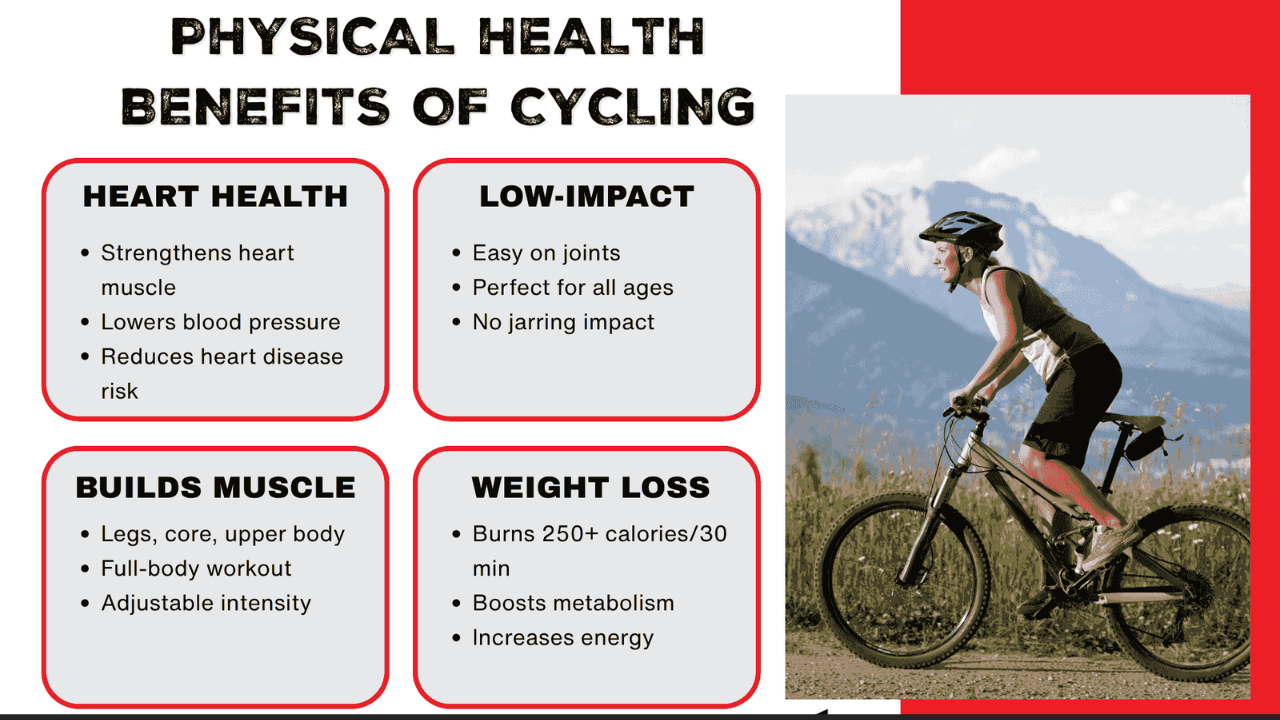
1. Improves Heart Health
One of the biggest advantages of cycling is its positive effect on cardiovascular health.
Regular cycling helps:
- Strengthen the heart muscles
- Improve blood circulation
- Lower blood pressure
- Reduce the risk of heart disease
- Improve oxygen delivery throughout the body
When you cycle, your heart works harder to pump blood, which gradually improves cardiovascular efficiency. Studies consistently show that people who cycle regularly have a lower risk of heart-related illnesses.
2. Helps with Weight Management
Weight gain has become a common issue due to sedentary lifestyles and unhealthy eating habits. Cycling is an effective way to burn calories and maintain a healthy weight.
Depending on intensity and body weight, cycling can burn between 300 and 800 calories per hour.
Benefits include:
- Increased calorie expenditure
- Reduced body fat
- Improved metabolism
- Better weight control
- Enhanced muscle definition
Combined with a balanced diet, cycling can be a powerful tool for long-term weight management.
3. Strengthens Muscles
Cycling engages multiple muscle groups throughout the body.
Major muscles involved include:
- Quadriceps
- Hamstrings
- Calves
- Glutes
- Core muscles
- Lower back muscles
Regular riding increases muscle endurance and strength without putting excessive stress on the joints.
4. Enhances Joint Mobility
Unlike running, cycling is a low-impact exercise. This means it places less stress on the knees, ankles, and hips.
Benefits include:
- Reduced joint strain
- Improved flexibility
- Better range of motion
- Lower injury risk
This makes cycling ideal for older adults and individuals recovering from injuries.
5. Improves Lung Function
Cycling increases breathing rate and oxygen intake, which improves respiratory efficiency over time.
Benefits include:
- Better lung capacity
- Increased oxygen utilization
- Enhanced endurance
- Improved stamina
Riding regularly helps the body become more efficient at delivering oxygen to muscles and organs.
6. Boosts Immune System
Moderate physical activity like cycling can strengthen the immune system.
Regular cyclists often experience:
- Reduced inflammation
- Better circulation of immune cells
- Lower risk of illness
- Faster recovery from minor infections
A stronger immune system contributes to overall well-being and long-term health.
Mental Health Benefits of Cycling
1. Reduces Stress
Modern life often brings stress from work, finances, and personal responsibilities.
Cycling provides an effective stress-relief mechanism by:
- Releasing endorphins
- Improving mood
- Reducing tension
- Encouraging relaxation
Even a short ride can significantly improve emotional well-being.
2. Helps Fight Anxiety and Depression
Physical activity is known to support mental health, and cycling is no exception.
Cycling can:
- Reduce symptoms of anxiety
- Improve emotional resilience
- Increase self-confidence
- Enhance feelings of accomplishment
The combination of exercise, fresh air, and movement creates powerful mental health benefits.
3. Improves Brain Function
Cycling increases blood flow to the brain, which supports cognitive performance.
Benefits include:
- Better concentration
- Improved memory
- Enhanced creativity
- Increased productivity
People who cycle regularly often report better focus and mental clarity.
4. Improves Sleep Quality
Poor sleep affects physical and mental health.
Cycling contributes to better sleep by:
- Reducing stress hormones
- Increasing physical fatigue
- Regulating circadian rhythms
- Promoting relaxation
Regular riders often experience deeper and more restorative sleep.
Cycling and Lifestyle Improvement
1. Encourages an Active Lifestyle
Cycling naturally increases daily movement and physical activity.
Instead of relying on cars or motorcycles, cyclists remain active throughout the day, leading to healthier habits overall.
2. Saves Money
Owning and maintaining a bicycle is significantly cheaper than operating a car or motorcycle.
Cycling helps reduce expenses related to:
- Fuel
- Parking
- Insurance
- Vehicle maintenance
- Public transportation
Over time, these savings can be substantial.
3. Builds Discipline
Regular cycling develops consistency and self-discipline.
Many cyclists create daily routines that encourage:
- Time management
- Goal setting
- Persistence
- Healthy habits
These qualities often extend into other areas of life.
4. Strengthens Social Connections
Cycling can be a social activity.
Joining cycling groups or participating in events allows people to:
- Meet like-minded individuals
- Build friendships
- Share experiences
- Stay motivated
Social interaction contributes positively to mental health and happiness.
Cycling for Different Age Groups
Children
Cycling helps children:
- Develop coordination
- Improve balance
- Stay physically active
- Build confidence
It also reduces screen time and encourages outdoor activities.
Teenagers
For teenagers, cycling provides:
- Improved fitness
- Better mental health
- Independence
- Enhanced focus for studies
Adults
Adults benefit from:
- Stress reduction
- Weight management
- Better cardiovascular health
- Increased productivity
Seniors
Older adults can enjoy:
- Improved mobility
- Better balance
- Enhanced cardiovascular fitness
- Greater independence
Environmental Benefits of Cycling
Reduces Carbon Emissions
Unlike motor vehicles, bicycles produce no direct emissions.
Choosing a bicycle instead of a car helps reduce:
- Air pollution
- Carbon footprint
- Greenhouse gas emissions
Less Traffic Congestion
More cyclists on the road mean fewer cars.
Benefits include:
- Reduced traffic jams
- Faster commuting
- Better urban mobility
Lower Noise Pollution
Bicycles operate quietly and contribute to more peaceful communities.
Sustainable Transportation
Cycling is one of the most environmentally friendly transportation options available.
It requires:
- Minimal energy
- Fewer resources
- Less infrastructure
Cycling for Fitness Goals
Weight Loss
Cycling supports weight loss by:
- Burning calories
- Increasing metabolism
- Improving fat utilization
Muscle Toning
Regular cycling tones:
- Legs
- Glutes
- Core muscles
Endurance Building
Long-distance cycling improves:
- Stamina
- Cardiovascular endurance
- Physical resilience
Safety Tips for Cyclists
To enjoy cycling safely:
Wear a Helmet
A properly fitted helmet significantly reduces head injury risk.
Use Reflective Clothing
Visibility is essential, especially during early mornings and evenings.
Follow Traffic Rules
Always obey:
- Traffic signals
- Road signs
- Lane regulations
Check Your Bicycle Regularly
Inspect:
- Brakes
- Tires
- Chain
- Lights
Regular maintenance prevents accidents and improves performance.